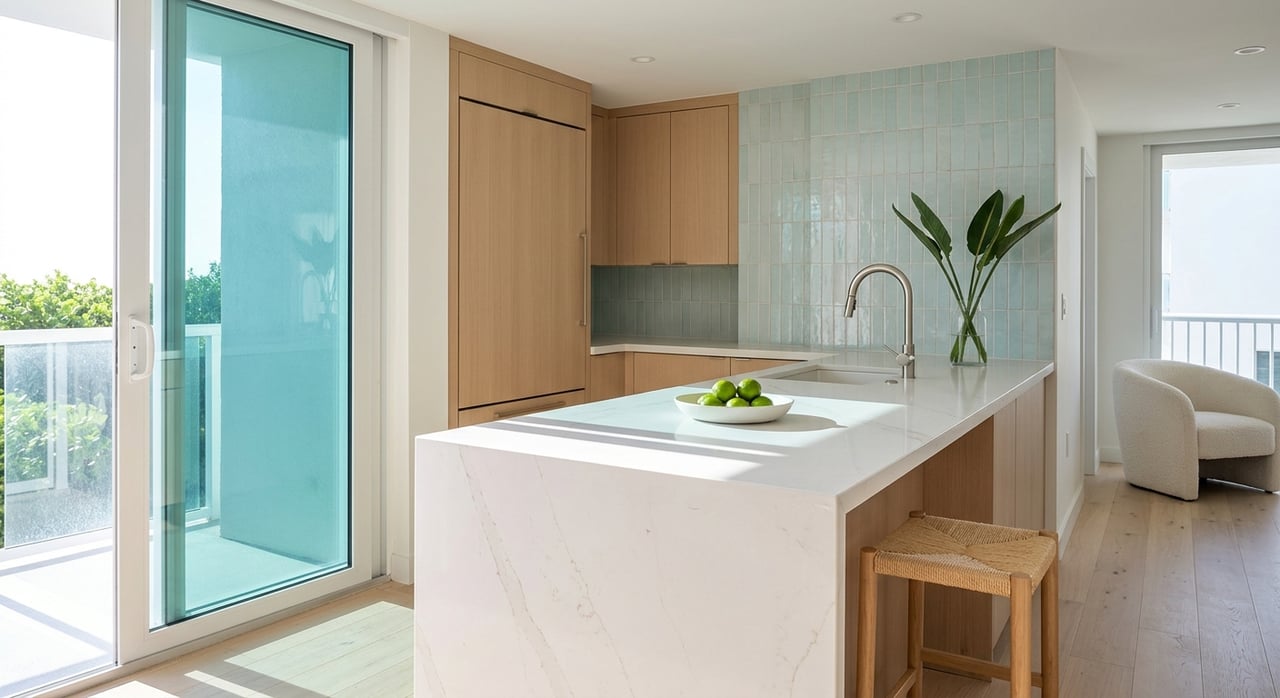
Wondering whether a remodel will help your Park Shore condo sell for more? It is a smart question, especially in a coastal luxury market where buyers notice both presentation and condition. If you are getting ready to sell, the goal is not simply to spend money. It is to make the right updates for your condo, your building, and today’s market. Let’s dive in.
Why the answer is rarely simple
Park Shore is not a cookie-cutter neighborhood. According to the Park Shore Association, the community began in 1964 as Florida’s first planned unit development and now includes more than 600 single-family homes and 3,590 units across 25 high-rise condominiums plus several mid-rise buildings. That long-established setting gives Park Shore a distinct luxury identity shaped by Gulf-front living, Venetian Bay, Venetian Village, private beach access, and marina connections.
Because of that, buyers are often drawn first to the location, views, and lifestyle. In many cases, they are weighing the waterfront setting and building appeal just as heavily as the interior finishes. That usually means a clean, polished, neutral condo can compete very well, even if it is not fully reimagined.
Current market conditions also support a thoughtful approach. NABOR reported 5,299 active listings in Collier County, along with 991 new listings, 1,066 pending sales, 900 closed sales, and 99 days on market in May 2026. When buyers have choices, condition and presentation matter, but over-improving can still work against you.
Start with the smartest question
Before you commit to a remodel, ask yourself this: Will this update help buyers feel more confident, or is it just making the condo more personal to your taste? That question can save you time, money, and stress.
In Park Shore, the best return often comes from improvements that make the home feel fresh and well cared for. Buyers want to picture their own style in the space. If your finishes compete with the Gulf view or feel too custom, a remodel may not deliver the payoff you expect.
What usually makes sense before listing
The 2025 Remodeling Impact Report found that, before selling, real estate professionals most often recommend painting and making sure major systems are in good shape. Kitchen upgrades also ranked as a meaningful value driver, but the report makes an important point: bigger spending does not always mean better resale efficiency.
The report’s cost recovery rankings show why sellers should be selective. A complete kitchen renovation and a minor kitchen upgrade both came in at 60 percent cost recovery, while bathroom renovation came in at 50 percent. In other words, a major renovation may improve appeal, but it does not guarantee a stronger financial return.
For most Park Shore condos, the most practical pre-listing updates are often:
- Fresh interior paint in neutral tones
- Deep cleaning
- Decluttering and editing furniture
- Minor lighting updates
- New hardware where needed
- Repairs for anything that looks worn or neglected
These updates help a condo feel crisp and move-in ready without creating unnecessary delay.
Refresh vs. update vs. full remodel
A helpful way to decide is to sort your condo into one of three categories: refresh, selective update, or full remodel. Each one serves a different type of seller.
Choose a refresh when the condo is basically market-ready
A refresh is best when your layout works, the condo is functional, and the finishes are reasonably current or at least neutral. In this case, your focus should be on presentation, not reconstruction.
This is often the right choice if you plan to sell soon. In a view-driven Park Shore setting, a refreshed condo can let buyers focus on the water, the light, and the overall lifestyle instead of getting distracted by avoidable cosmetic issues.
Choose a selective update when finishes feel dated
A selective update makes sense when the condo shows well overall, but the kitchen, baths, lighting, or surfaces feel tired. You are not changing the whole property. You are improving the parts buyers notice first.
This could mean updating cabinet hardware, replacing dated fixtures, refreshing paint, or improving countertops and sinks if the work fits within building and permit rules. If the bones are good, this middle-ground approach often gives sellers the best balance between cost and market appeal.
Choose a full remodel only when the condo truly needs it
A full remodel is usually the exception, not the default. It may make sense if the condo feels clearly obsolete, has a poor layout, or sits in a price range where the market can realistically absorb a major renovation.
Even then, timing matters. If your building, association, or permit process could slow the project, the remodel may not be worth the delay if your goal is to sell in the near term.
Naples permit rules can affect your timeline
In the City of Naples, many cosmetic projects do not require a permit. The city says painting or wallpaper, carpet installation, interior residential door replacement, plumbing fixture replacement, and same-location replacement of countertops and sinks can often be done without one.
That creates a useful line between a simple refresh and a true remodel. The city also notes that kitchen cabinetry replacement in a condominium does require a permit, which can add time and coordination.
If you are thinking about more invasive work, caution is even more important. The City of Naples notes that converting a condominium lanai to living space can trigger fire separation, sprinkler, and vertical opening requirements, especially in buildings over three stories. That makes lanai enclosures and wall changes risky last-minute listing projects.
Your building matters as much as your unit
In Park Shore, many condo buildings are older coastal properties. That does not make them less desirable, but it does mean buyers may pay close attention to building-level details, not just your interior finishes.
The City of Naples says milestone inspections are required for condominium and cooperative buildings that are three stories or more, with a 25-year trigger for buildings within three miles of the coastline and a 30-year trigger for buildings farther inland. For a coastal neighborhood like Park Shore, that can be an important part of buyer due diligence.
Florida Statute Chapter 718 also requires structural integrity reserve studies for qualifying condominium buildings that are three stories or higher. The statute includes deadlines and disclosure requirements affecting certain sale contracts entered after December 31, 2024, including providing buyers with applicable inspection summaries or reserve study information when required.
For you as a seller, this means one thing: review your association status before you overspend on cosmetics. If buyers are asking about reserves, milestone inspections, planned repairs, or assessments, those answers may carry more weight than a fully redone backsplash or designer tile choice.
Where to spend first
If you want the shortest path to a stronger listing, focus on the updates that improve first impression and buyer confidence. In Park Shore, that usually means making the condo feel bright, clean, and easy to enjoy from the moment someone walks in.
A smart pre-listing priority order often looks like this:
- Fix deferred maintenance
- Paint where needed
- Deep clean every surface
- Simplify and stage the space
- Update small visible finishes
- Consider selective kitchen or bath improvements only if they clearly help marketability
This kind of disciplined approach helps you avoid putting money into areas buyers may plan to customize later.
Do buyers care about energy efficiency?
In some cases, yes. NAR’s 2025 Residential Sustainability Report found rising client interest in energy efficiency, with fewer respondents saying clients never ask about energy upgrades compared with the prior year. The same report said the most important green features for clients are windows, doors, and siding, with interest often tied to resale value, lower energy costs, and financial incentives.
In a coastal condo setting, that may translate into buyer interest in efficient systems and upgraded openings where building rules allow. It is not a reason to launch a major pre-sale project on its own, but it can support thoughtful upgrades when they fit your timeline and association rules.
The bottom line for Park Shore sellers
For most owners, a refresh or selective update is the smarter move than a full remodel. Park Shore buyers are often purchasing a luxury waterfront lifestyle, a view corridor, and a well-located residence in one of Naples’ best-known coastal communities. Your job is to make the condo feel cared for, functional, and easy to love.
If your unit is clearly outdated or poorly laid out, a larger renovation may be worth exploring. But if the condo is sound and the building checks out, a polished presentation usually offers a better balance of speed, cost control, and resale potential.
When you are weighing what to do before listing, local guidance matters. A detail-oriented strategy can help you avoid over-improving, sidestep permit headaches, and position your condo for the right buyer from day one. If you are considering selling in Park Shore, Annie Hagstrom can help you evaluate which updates are worth it and which ones you can skip.
FAQs
Should you remodel a Park Shore condo before selling?
- Usually, a light refresh or selective update makes more sense than a full remodel unless the condo is clearly obsolete, poorly laid out, or positioned for a larger renovation.
What updates add the most value before selling a condo in Park Shore?
- Fresh paint, deep cleaning, decluttering, minor lighting or hardware updates, and repairing visible wear typically offer the most practical pre-listing value.
Do you need a permit to update a Park Shore condo before listing?
- In the City of Naples, many cosmetic projects do not need a permit, but condominium kitchen cabinetry replacement does require one.
Should you renovate a condo lanai before selling in Naples?
- Usually not as a last-minute listing project, because converting a lanai to living space can trigger fire separation, sprinkler, and other code requirements.
Do Florida condo rules matter when selling a Park Shore unit?
- Yes. Buyers may review milestone inspection status, reserve studies, association budgets, and planned repairs or assessments, so those building-level details can affect your sale.
Do Park Shore condo buyers care more about views or finishes?
- In many cases, buyers are strongly drawn to the location, water views, and lifestyle, which is why neutral, polished presentation often works better than highly personalized remodeling choices.