Thinking about a canal home in Royal Harbor? It is easy to focus on the postcard appeal of a private dock and quick access to the water, but the smartest buyers look deeper before they fall in love. If you want a home that supports your boating lifestyle and protects your long-term plans, you need to understand how Royal Harbor’s canals, permits, seawalls, and flood rules can affect ownership. Let’s dive in.
Royal Harbor’s Waterfront Setting
Royal Harbor is a City of Naples neighborhood on the east side of Naples Bay. The canals in Royal Harbor are part of the East Naples Bay Special Taxing District, which also covers Golden Shores and Oyster Bay and was created to support water quality, navigability, and maintenance dredging.
That matters because Royal Harbor is best understood as a boating-oriented waterfront neighborhood, not a beachfront one. NOAA identifies Gordon Pass as the entrance to Naples Bay and notes that the canals and homesites in this area were created through dredging and backfilling, which shaped the neighborhood around water access.
Canal Homes vs. Bayfront Expectations
Not every waterfront lot in Royal Harbor offers the same experience. Canal-front homes often give you dock utility, privacy, and direct boating convenience, while bayfront lots are more likely to offer wider water views and sunset exposure.
Because Royal Harbor sits on the east side of Naples Bay, a west- or northwest-facing bayfront lot is generally the type most likely to capture broad-water views. Still, orientation, neighboring structures, and view corridors should be checked on a parcel-by-parcel basis before you make assumptions.
Built Form and Lot Context
Royal Harbor has a relatively built-out, low-rise residential pattern. A 2025 City of Naples development-character report indicates higher average lot coverage than other southern Naples areas and an estimated average building height of 1.67 stories.
For you as a buyer, that can shape how a property feels in real life. It may influence privacy, sunlight, sightlines, and the scale of nearby homes, so it is worth looking beyond listing photos and studying the immediate surroundings carefully.
Boating Access Starts With the Route
For many buyers, the real value of a Royal Harbor canal home starts at the dock. The usual route is canal to Naples Bay to Gordon Pass and then out to the Gulf.
That route sounds simple, but the day-to-day experience depends on more than whether a property is technically waterfront. NOAA notes that Gordon Pass has a dredged, buoyed, and lighted channel, and also states that no-wake speed limits apply in Gordon Pass and in Naples Bay between Daybeacon 29 and the Naples bridge.
This means you should think about actual transit time, slower-speed operation, turning space, and how your boat handles in the canal system. A home can have excellent water access on paper but still feel less convenient if your vessel’s size or handling needs are a tight fit.
Check Boat Fit, Depth, and Canal Conditions
A private dock is only useful if it works for your specific boat. Draft, beam, air draft, canal width, and dock layout all deserve close review before you move forward.
City code references canal depth standards, including a minimum canal depth at the seawall or base of riprap of 1 foot below mean low water. Even so, you should not assume your parcel has adequate depth just because it is canal-front. Actual water depth and dock conditions need to be verified at the property itself.
It is also wise to confirm the exact route from the dock to Naples Bay and Gordon Pass. If you own or plan to purchase a larger vessel, those details can affect everyday usability and long-term satisfaction.
Docks and Seawalls Need Careful Due Diligence
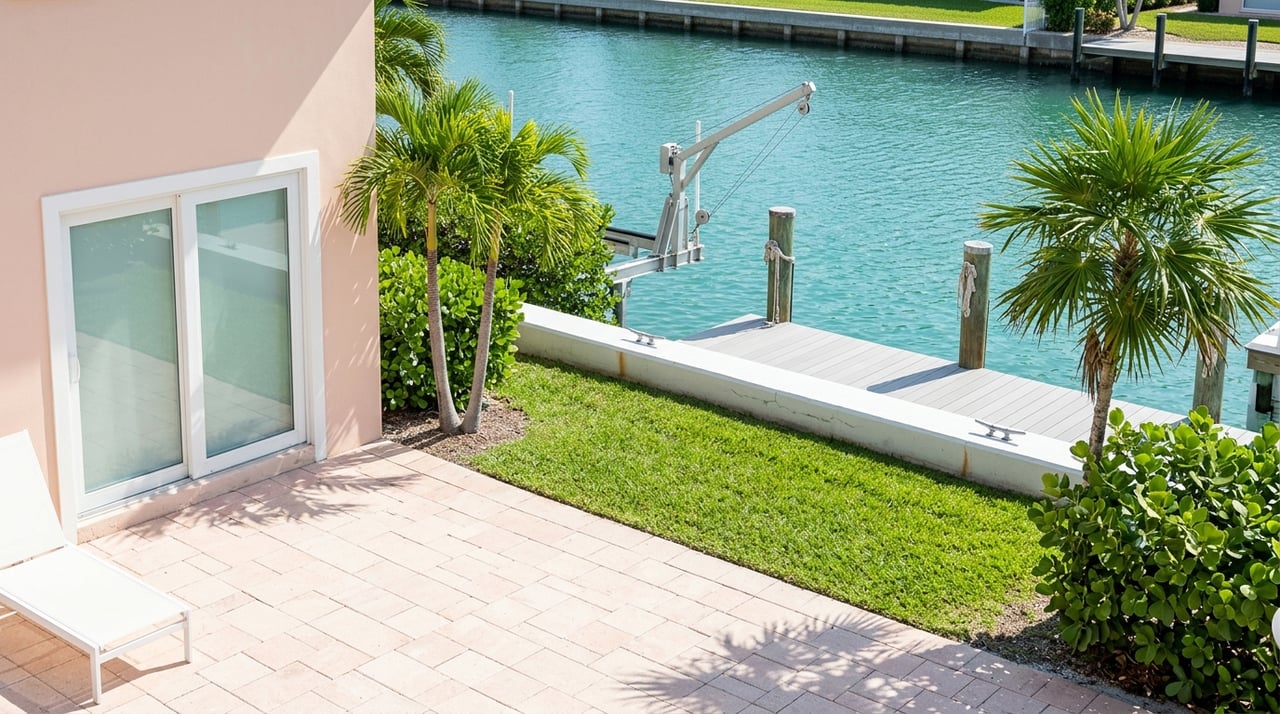
In Royal Harbor, marine structures are not casual add-ons. The City of Naples treats work on docks, boat lifts, pilings, seawalls, riprap, and dredging as regulated work that requires permits.
For dock work, city submittals may require an aerial view, a site plan or survey, and electrical plans. For seawall work, the city requires a site plan or survey and structural plans, and it reviews conditions differently depending on whether the property is in a manmade canal or a natural water body.
If you are buying an older waterfront home, this is a major due diligence area. You will want to confirm whether the dock, lift, seawall, and any prior dredging or shoreline work were properly permitted and completed.
Seawall Condition Can Affect Future Costs
The seawall is one of the most important physical components of a canal-front property. If it is aging, damaged, or altered without proper approval, future repairs can become a significant ownership issue.
The City of Naples permit guidance for seawalls asks for adjoining seawall elevations and top-of-cap elevations. It also flags stormwater review when a new seawall raises the cap elevation and requires a final survey for certificate of completion.
In practical terms, you should ask when the seawall was last inspected and whether tiebacks, cap condition, riprap, and drainage transitions are in acceptable condition. These details may not be obvious during a casual showing, but they can matter greatly after closing.
Floodplain Rules Matter Before You Renovate
Floodplain review is another key issue for Royal Harbor buyers. The City of Naples states that almost all permitted development requires floodplain review.
The city also defines substantial improvement as work equal to or greater than 50 percent of the structure’s market value before construction. If a building is substantially improved or substantially damaged, it must be brought into compliance with flood regulations, including elevation requirements.
This matters if you are planning to update, expand, or reimagine a home after purchase. Permit history, prior remodel scope, and the home’s current compliance status can directly affect your renovation timeline, design options, and ownership costs.
Understand the Special Taxing District
A Royal Harbor address may also come with obligations tied to the East Naples Bay Special Taxing District. This district was established to support canal-system maintenance dredging and navigation aids in Royal Harbor and nearby subdivisions.
Before you close, it is worth confirming whether the specific parcel is inside the district. You should also ask whether there are current or planned assessments or dredging-related costs that could affect your ownership budget.
Nearby Support for Boaters
Even if you have a private dock, nearby boating infrastructure can still be useful. Naples City Dock in Crayton Cove, located on Naples Bay, offers transient dockage, fuel, pump-out service, and charters.
That can be helpful for guest arrivals, service coordination, or overflow needs. It is not a substitute for a well-matched private dock, but it can add flexibility to the boating lifestyle many buyers want in this part of Naples.
Questions to Ask Before You Buy
When you are evaluating a canal home in Royal Harbor, a focused set of questions can save you time and reduce surprises. These are some of the most important ones to review with the right professionals:
- What is the exact boating route from the dock to Naples Bay and Gordon Pass?
- Does your boat’s draft, beam, and air draft fit that route comfortably?
- Is there a current survey showing canal width, dock protrusion, seawall cap elevation, and adjacent shoreline elevations?
- Were the dock, lift, seawall, and any dredging work properly permitted?
- When was the seawall last inspected, and what is its current condition?
- Is the home subject to flood zone or substantial-improvement considerations that could affect renovation plans?
- Is the property inside the East Naples Bay Special Taxing District, and are there any current or planned assessments?
A Smarter Way to Buy in Royal Harbor
Buying a canal home in Royal Harbor can be incredibly rewarding if the property truly fits your boating needs, renovation goals, and long-term lifestyle. The key is to look past the dock and the water view long enough to understand the route, the structures, the permits, and the property-specific constraints.
That kind of detailed review helps you buy with confidence instead of guesswork. If you are exploring Royal Harbor or comparing Naples waterfront options, Annie Hagstrom offers the local insight and detail-oriented guidance to help you evaluate each opportunity with care.
FAQs
What makes Royal Harbor different from other Naples waterfront areas?
- Royal Harbor is a boating-oriented City of Naples neighborhood on the east side of Naples Bay, with canal access through Naples Bay and Gordon Pass rather than a beachfront setting.
What should buyers verify about a Royal Harbor canal dock?
- You should verify the exact route to open water, canal width, dock layout, and whether your boat’s draft, beam, and air draft fit the property and route.
Why is seawall due diligence important for a Royal Harbor home?
- Seawalls are major structural components of canal-front properties, and their condition, elevation, repairs, and permit history can affect future costs and project timelines.
How do flood rules affect a Royal Harbor home purchase?
- The City of Naples says most permitted development requires floodplain review, and substantial improvement rules can trigger elevation and compliance requirements during renovation.
What is the East Naples Bay Special Taxing District in Royal Harbor?
- It is a district created to support canal maintenance, dredging, water quality, and navigation aids in Royal Harbor and nearby canal neighborhoods, so buyers should confirm whether a parcel is included and whether assessments apply.
Are all Royal Harbor waterfront lots the same for views?
- No. Canal-front lots often prioritize dock use and privacy, while bayfront lots are generally more likely to offer broader water and sunset views depending on orientation and surrounding conditions.